|
1 |
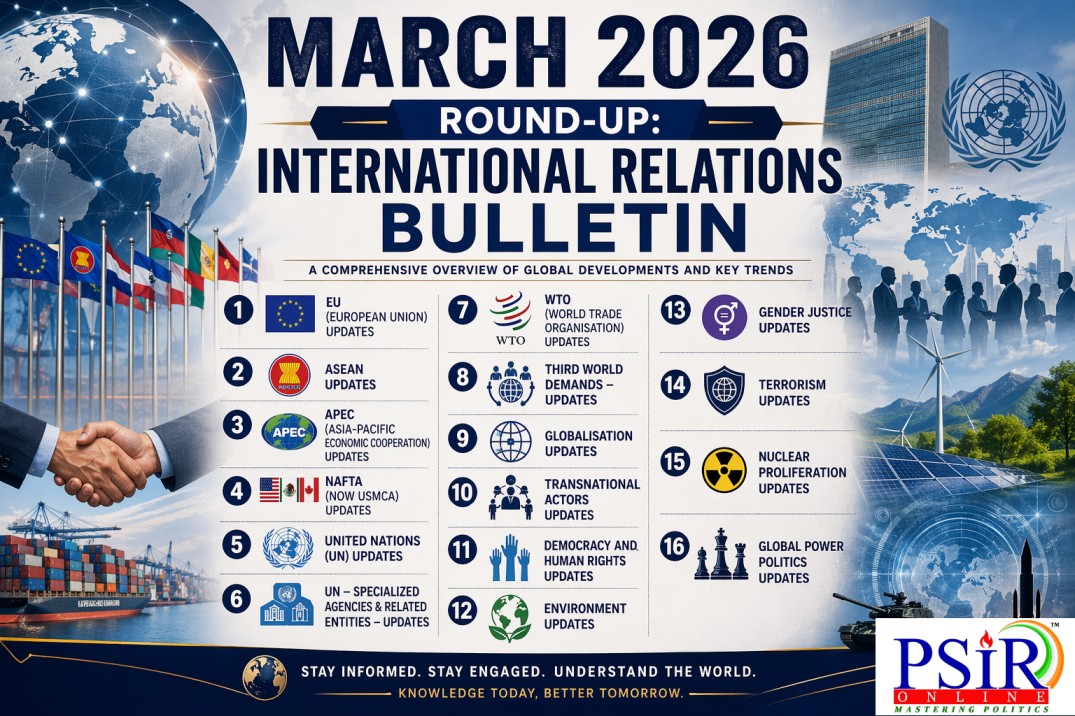
EU (EUROPEAN UNION) UPDATES
Major Political and Strategic Developments
· European Council Summit (19 March 2026): EU leaders met in Brussels and adopted conclusions covering multiple priorities. They launched the “One Europe, One Market” agenda to strengthen the EU’s single market and boost competitiveness amid global challenges (e.g., rivalry with the US and China). The agenda includes measures to be implemented in 2026 where possible, with full rollout targeted by the end of 2027. o Discussions focused on Ukraine (reaffirming support and Ukraine’s EU future, though a €90 billion loan faced hurdles due to Hungary’s veto linked to energy issues like the Druzhba pipeline). o The Middle East situation, including condemnation of Iran’s actions and energy security concerns (e.g., Strait of Hormuz disruptions). o Other topics: European defence and security, migration, multilateralism, democratic resilience, online child protection, and the EU’s eastern regions. · A Euro Summit occurred alongside the meeting to address euro-area economic issues in light of Middle East developments.
Competitiveness and Single Market · EU leaders declared 2026 as “the year of European competitiveness.” · Emphasis on immediate steps to address rising energy prices and longer-term initiatives for a more effective single market of 450 million consumers.
Business and Corporate Reforms · EU Inc. Proposal (18 March 2026): The European Commission proposed a new optional, harmonized pan-European corporate form (“EU Inc.” or part of the “28th regime”). It aims to simplify business setup across the EU with fully digital procedures, allowing companies to incorporate in as little as 48 hours. The goal is to help innovative firms scale up, stay in Europe, and attract others back to the single market. The Commission urged quick agreement by the end of 2026.
Foreign Policy and International Relations · Ukraine Support: Continued emphasis on aid, accession progress, and a process for the EU to join a Special Tribunal for the Crime of Aggression against Ukraine. Informal Foreign Affairs Council held in Ukraine (31 March). · Middle East: Unity in condemning Iran’s strikes; discussions on maritime security and energy routes. · Negotiations opened with Australia on association to the EU’s research programme. · Trade: Parliament positions on EU-US deal tariffs; ongoing work on other agreements.
|
|
|
2 |
ASEAN UPDATES
Geopolitical and Security Developments (Middle East Crisis) · Special ASEAN Foreign Ministers’ Meeting (13 March 2026, via videoconference): ASEAN Foreign Ministers convened urgently to discuss the Middle East escalation (attacks on Iran starting 28 February, subsequent retaliatory strikes, and broader regional tensions). They expressed serious concern over threats to civilian lives, regional/global peace, and stability. Key calls included: o Immediate cessation of hostilities. o Utmost self-restraint by all parties. o Resolution of differences through diplomacy and dialogue. o Respect for international law and the UN Charter. o Assessment of implications for ASEAN, particularly energy, food security, and safety of nationals. · An earlier ASEAN Foreign Ministers’ Statement on the Situation in the Middle East was issued around 4 March, reinforcing similar positions. · Follow-up discussions emphasized coordinated actions for regional resilience ahead of the 48th ASEAN Summit in May.
Economic and Trade Responses · 32nd ASEAN Economic Ministers’ Retreat (13 March 2026, Taguig, Philippines): Economic Ministers met in person and issued a Joint Statement on Strengthening ASEAN’s Economic Resilience. They addressed the global/regional impacts of Middle East tensions (e.g., rising oil/gas prices, supply chain disruptions, inflation risks). Focus areas included: o Enhancing intra-ASEAN trade. o Diversifying energy sources. o Bolstering supply chain resilience. o Deeper economic community coordination. o Proposals for a Joint AEM-AMM (Economic and Foreign Ministers) Meeting for crisis response. · Broader context: ASEAN+3 economies entered 2026 with strong growth and buffers from 2025 but faced heightened risks from energy shocks. Policymakers were urged to maintain fiscal discipline and regional cooperation to avoid stagflation. · China-ASEAN trade continued robustly, with reports of significant growth in early 2026 bilateral figures.
Other Key Meetings and Initiatives in March 2026
· Socio-Cultural and Community Pillar Activities: o 40th Senior Officials’ Committee for ASCC (SOCA) and 35th ASCC Council Meeting (early March, Manila). o 5th ASEAN TVET Council Meeting and Regional Policy Dialogue (12-13 March, Bangkok) — focusing on education and skills. o 2nd ASEAN-UK Creative Economy Symposium (25-26 March, Manila). · Economic and Finance Track: o 31st ASEAN Senior Level Committee on Financial Integration (11-12 March, Boracay). o 44th ASEAN Capital Markets Forum (ACMF) Chairs’ Meeting (26 March, Boracay). o Various business forums, MSME showcases, and sustainable infrastructure discussions. · External Partnerships: o 27th ASEAN-China Joint Cooperation Committee Meeting (30 March, Jakarta) — reinforced the Comprehensive Strategic Partnership and marked 2026 as the fifth anniversary year of the CSP. o 5th ASEAN-UK Senior Officials’ Meeting (30-31 March, Wilton Park, UK) — celebrated the fifth anniversary of the Dialogue Partnership, with discussions on geoeconomics, maritime cooperation, AI governance, and cultural/creative ties. o ASEAN-Japan engagements on economic resilience and cybersecurity. · Myanmar: Continued support for the ASEAN Chair’s Special Envoy (H.E. Ma. Theresa P. Lazaro) and the Five-Point Consensus for an inclusive, peaceful resolution. · Other: Progress on Initiative for ASEAN Integration (IAI) Work Plan V (2026–2030); discussions on maritime cooperation declaration for the May Summit; commemoration planning for the 50th Anniversary of the Treaty of Amity and Cooperation (TAC).
|
|
|
3 |
APEC (ASIA-PACIFIC ECONOMIC COOPERATION) UPDATES
Key Meetings and Working Group Activities · 71st Energy Working Group (EWG) Meeting (18–19 March 2026, Nanchang, China): Energy officials, experts, scholars, and enterprise representatives from APEC economies gathered to discuss energy-related cooperation, including updates on APEC developments, secretariat reports, and policy initiatives for sustainable and secure energy.
Broader Context and External Influences · Geopolitical and Economic Backdrop: March 2026 saw heightened global attention on the escalating Middle East conflict (involving US/Israeli actions and Iranian responses), which raised concerns over energy prices, supply chain disruptions, and inflation risks across the Asia-Pacific. While APEC did not hold a dedicated high-level response meeting in March (unlike ASEAN’s urgent sessions), discussions in working groups (e.g., energy) implicitly addressed resilience to such external shocks, building on themes of openness and cooperation. · Member Engagement: Economies, including the US and South Korea (which chaired the Budget and Management Committee), continued active participation to shape deliverables for later 2026 meetings. Emphasis remained on voluntary cooperation, innovation (including AI and digital transformation), and inclusive growth.
|
|
|
4 |
NAFTA (now USMCA) UPDATES
Launch of the USMCA Joint Review Process · March 5, 2026: U.S. Trade Representative (USTR) Jamieson Greer and Mexican Secretary of Economy Marcelo Ebrard announced the launch of bilateral discussions in preparation for the Joint Review. Negotiators were instructed to begin scoping talks on measures to ensure USMCA benefits accrue primarily to the three parties, including: o Reducing dependence on non-regional (especially non-market) imports. o Strengthening rules of origin. o Enhancing the security and resilience of North American supply chains. · First technical meetings were set for the week of March 16. · March 18, 2026: Greer and Ebrard met in Washington to kick off technical-level bilateral discussions. Focus areas included: o Increasing U.S. and Mexican production and manufacturing employment. o Addressing gaps in key North American supply chains. o Policy options for economic security, tighter rules of origin, and complementary trade actions. o Technical teams were tasked with holding regular meetings to identify deliverables ahead of the July 1 Joint Review.
These talks proceeded on a bilateral track (U.S.-Mexico first), with indications of separate U.S.-Canada discussions. No full trilateral meeting was reported in March. Analysts noted this bilateral approach could signal a potential shift toward separate bilateral deals if trilateral consensus proves difficult
|
|
|
5 |
UNITED NATIONS (UN) UPDATES
Middle East Crisis and UN Response · Secretary-General’s Focus: António Guterres repeatedly warned that the war was “out of control” and “spreading like wildfire,” urging immediate de-escalation, diplomacy, and full respect for international law. He highlighted risks to global energy security (e.g., Strait of Hormuz disruptions), civilian suffering, and humanitarian operations. On 25 March, he appointed Jean Arnault as his Personal Envoy to lead UN efforts on the conflict and its consequences. · Security Council Activity: The US held the Council presidency. Multiple meetings addressed the Middle East situation, including an urgent session on 11 March and further briefings (e.g., 24 and 31 March). Discussions covered Lebanon, Syria, Yemen (Houthi attacks), and broader regional stability. The Council also addressed related sanctions and non-proliferation issues. · Lebanon/UNIFIL: Escalating Israeli-Hezbollah clashes led to the deaths of at least three Indonesian UN peacekeepers (UNIFIL) in late March. Guterres strongly condemned the attacks and called for protection of UN personnel and civilians. Humanitarian access deteriorated sharply, with mass displacement in southern Lebanon and Beirut suburbs. · Yemen and Other Spillover: The UN Special Envoy for Yemen condemned Houthi decisions to join the regional conflict by attacking Israel. Humanitarian aid faced blockages, and maritime security concerns grew. · Humanitarian Impact: UN agencies (OCHA, WHO, WFP, UNHCR) reported severe disruptions to aid, fuel shortages, and risks to food security. Strikes on infrastructure (e.g., desalination plants) worsened the crisis. Guterres stressed that ending the war was the only way to minimize consequences.
UN System Reform and General Assembly · Landmark Resolution (31 March): The General Assembly adopted a major resolution to strengthen how UN mandates are created, implemented, and reviewed across the system. Guterres called it a “historic” and “major step” toward a more efficient UN, while President of the GA Annalena Baerbock highlighted it as part of broader reform efforts. · Other GA activity included discussions on global issues, with resolutions on topics such as education access and historical injustices.
Human Rights Council (61st Session, concluded 31 March) The session (23 February–31 March) addressed multiple crises: · Ukraine: Warnings that dangers were “increasing,” particularly from Russian drone and missile attacks (e.g., a massive wave on 23–24 March killing civilians). · Haiti: Described as a “vortex of violence” at disastrous levels, with gangs exacerbating starvation and extortion. · Sudan: Surge in drone attacks on civilians, including hospital strikes. · Middle East: Urgent debates and calls for de-escalation.
|
|
|
6 |
UN - SPECIALIZED AGENCIES & RELATED ENTITIES- UPDATES
IAEA (International Atomic Energy Agency) · Board of Governors Meeting (2–6 March 2026, Vienna): A special session addressed military strikes on Iran. Director General Rafael Grossi urged restraint, diplomacy, and a return to negotiations on Iran’s nuclear program. He reported no detectable elevation in radiation levels in neighboring countries and highlighted the IAEA’s “indispensable role” in any future diplomatic process. Regular agenda items included Nuclear Safety Review 2026, Nuclear Security Review 2026, Nuclear Technology Review 2026, safeguards in Iran, Ukraine, Syria, and the DPRK. · Grossi emphasized nuclear safety risks amid the conflict and called for full IAEA access to Iranian facilities.
UNESCO (United Nations Educational, Scientific and Cultural Organization) · Global Education Monitoring (GEM) Report 2026 Launch (25 March, Paris): The report warned that 273 million children and youth were out of school—the seventh consecutive year of increase—driven by population growth, crises, shrinking budgets, and conflicts. It forms the first part of a “Countdown to 2030” series on access and equity, highlighting successes in some countries but urgent gaps in pre-primary and secondary education. · UN World Water Development Report 2026 Launch (19 March, New York; also Venice): Titled Water for All People: Equal Rights and Opportunities, the report (coordinated by UNESCO’s World Water Assessment Programme) links water access to gender equality and calls for inclusive governance to solve the global water crisis.
FAO (Food and Agriculture Organization) & WFP (World Food Programme) · International Day of Forests (21 March) and World Water Day (22 March): FAO hosted high-level events in Rome emphasizing forests and water for resilient agrifood systems and SDGs. · Middle East Crisis Response: Both agencies warned of severe disruptions. WFP projected that prolonged conflict could push an additional 45 million people into acute food insecurity by mid-2026 due to oil price spikes, fertilizer shortages (urea prices surged ~46% month-on-month), and shipping halts in the Strait of Hormuz. FAO noted threats to agricultural production and global food security, with tanker traffic down over 90%. Humanitarian supply chains faced major blockages. · Joint concerns with IMF and World Bank (statements building in March, formalized later) on rising food prices and insecurity in import-dependent economies.
WHO (World Health Organization) · Director-General Tedros Adhanom Ghebreyesus highlighted obesity as “one of the greatest health problems of our time,” noting available tools like GLP-1 therapies. WHO contributed to Geneva briefings on the Lebanon humanitarian crisis and regional health impacts from the Middle East escalation (e.g., risks to aid delivery and infrastructure strikes).
UNHCR (UN Refugee Agency) & OCHA (Office for the Coordination of Humanitarian Affairs) · Middle East Humanitarian Emergency: UNHCR declared the situation a major emergency, monitoring displacement (e.g., hundreds of thousands fleeing Lebanon to Syria) and preparing for up to 350,000 crossings. Concerns focused on civilian protection, further refugee flows, and disrupted aid to Gaza, Sudan, and Yemen. OCHA coordinated regional responses amid supply chain breakdowns. · UNICEF expressed deep concern over child casualties and strikes affecting children across the region.
|
|
|
7 |
WTO (WORLD TRADE ORGANISATION) UPDATES
Global Trade Outlook and Statistics (Released 19 March) · The WTO Secretariat published its Global Trade Outlook and Statistics – March 2026, forecasting a slowdown in world trade: o Merchandise trade volume growth: 1.9% in 2026 (down from 4.6% in 2025), rising to 2.6% in 2027. o Services trade: 4.8% in 2026 (down from 5.3% in 2025), then 5.1% in 2027. o Combined goods and services trade: 2.7% in 2026 (vs. 4.7% in 2025), roughly in line with projected GDP growth of 2.8%. · 2025 performance exceeded earlier expectations, driven by surging AI-related goods trade (offsetting tariff impacts and policy uncertainty) and frontloading of imports in North America. Asia contributed ~71% of merchandise trade volume growth. · Downside risks: Prolonged Middle East conflict could reduce 2026 merchandise trade growth by up to 0.5 percentage points (and services by 0.7 points) via higher energy prices, disrupted shipping/routes, and impacts on food supplies and tourism. · Upside potential: Continued strong AI investment and related trade. · Analytical highlights included the declining share of world trade conducted on most-favoured-nation (MFN) terms (down to ~72% by early 2026 due to policy shifts) and emerging estimates of AI-enabled services exports.
14th WTO Ministerial Conference (MC14, Yaoundé, Cameroon – 26–30 March)
· Opening (26 March): Director-General Ngozi Okonjo-Iweala stated that the “world order and multilateral system we used to know has irrevocably changed” and called for reinvigorating the WTO through reform to address geopolitical strife, protectionism, and the paralyzed dispute settlement system. · Key Outcomes and Impasse: o The conference ended early on 30 March in a partial impasse, with no comprehensive package. A proposed extension of the Moratorium on Customs Duties on Electronic Transmissions (to 2030) was blocked by Brazil and Turkey, despite broad support and U.S. efforts for a longer or permanent extension. This prevented progress on a broader U.S.-backed reform agenda. o Ministers adopted some decisions and committed to continuing work in Geneva on outstanding issues (e.g., agriculture, fisheries subsidies negotiations, development/S&DT improvements). o Investment Facilitation for Development Agreement (IFDA): 129 participating members issued a joint ministerial declaration advancing the plurilateral initiative. o Digital trade: A group of members bypassed full consensus hurdles to introduce baseline digital trade rules among consenting participants. Some progress on e-commerce governance, though the moratorium lapse remained contentious. o Dispute settlement: Emphasis on the Multi-Party Interim Appeal Arbitration Arrangement (MPIA) as a “practical, confidence-building bridge” pending full reform. Discussions on restoring a functional two-tier system continued. o Other areas: Continued fisheries subsidies talks; small wins on food safety/product standards treatment for developing countries; calls for balanced reform covering negotiation, monitoring, and dispute functions. · Broader Context: High tensions over tariffs, unilateral measures, development priorities (especially for LDCs and Africa), and the need for WTO relevance amid “tariff wars” and economic nationalism. The EU and others expressed disappointment but noted commitments to Geneva follow-up.
|
|
|
8 |
THIRD WORLD DEMANDS – UPDATES
Here’s a summary of key "Third World" / Global South demands and developments in March 2026. The term “Third World” (now largely replaced by Global South, developing countries, LDCs — Least Developed Countries, or G77 + China) refers to coordinated positions by developing nations in multilateral forums. March 2026 was dominated by the WTO’s 14th Ministerial Conference (MC14) in Yaoundé, Cameroon (26–30 March), where Global South priorities clashed with reform pushes from major powers amid the Middle East conflict’s ripple effects (energy shocks, food insecurity, and debt risks for vulnerable economies).
WTO MC14: Core Demands and Outcomes Developing countries, LDCs, the African Group, ACP (Africa, Caribbean, Pacific), and LDC Group entered MC14 with a focused set of longstanding and emerging demands: · Special and Differential Treatment (S&DT): Strong push to make S&DT more effective, operational, and tailored to actual needs rather than a rigid self-designation system. Calls for flexibilities, technical assistance, and capacity building without eroding policy space for development. Concerns that WTO reform could impose new obligations without matching support, widening participation gaps. · Agriculture and Food Security: Urgent progress on public stockholding for food security (critical for stabilizing prices and supporting smallholders), a Special Safeguard Mechanism, domestic support reductions by developed countries, cotton subsidies, and export restrictions. Many developing nations rely on these tools amid rising food prices from Middle East disruptions. Issues remained largely deferred. · LDC-Specific Package: Smooth transition measures for countries graduating from LDC status; extension/operationalization of the Enhanced Integrated Framework (EIF) (third phase through 2031); better integration into global supply chains; and TRIPS technology transfer provisions. A modest “LDC package” was part of the unfinished Yaoundé draft. · E-Commerce and Digital Trade: Resistance to making the moratorium on customs duties on electronic transmissions permanent or long-term, citing revenue losses (especially harmful for women in gig/online work in developing countries). Calls for a robust Work Programme on E-Commerce with capacity building to bridge the digital divide. The moratorium was not extended at MC14 due to opposition (including from Brazil and Turkey), seen as a partial win for some Global South voices. · Fisheries Subsidies: Continued negotiations with strong Special and Differential Treatment for developing countries and small-scale fishers (while restricting large-scale industrial subsidies). · Investment Facilitation for Development (IFDA): Broad support from many developing members (91 developing economies, including 27 LDCs, backed the plurilateral agreement), but incorporation into the WTO framework faced blocks. · WTO Reform: Emphasis on preserving core principles (including MFN), balancing rights/obligations, and ensuring reform does not replicate inequalities. Pushback against “new issues” that sideline development; calls for inclusive decision-making and addressing marginalization of LDCs. Draft Yaoundé Ministerial Declaration on reform reflected concerns from countries like India, Pakistan, and Bangladesh.
MC14 Results for Global South: The conference ended early in partial impasse with no full “Yaoundé Package.” Small wins included decisions on integrating small economies and strengthening S&DT in SPS/TBT (food safety and standards) agreements. Fisheries talks continued, and some development elements advanced to Geneva for follow-up. Critics (including civil society) viewed the limited outcomes as exposing power imbalances, with developing countries needing stronger unity. Some analysts called it a “strategic pause” preventing further entrenchment of unequal rules.
Broader Global South Positions (G77 + China and Related) · UN and Multilateral Forums: G77 + China delivered multiple statements in March on UN administrative/financial efficiency, ECOSOC meetings (credit ratings, tax cooperation), BBNJ (marine biodiversity) funding and mechanisms, and HLPF/SDG reviews. Core themes included: o Opposition to unilateral coercive measures. o Calls for equitable international financial architecture reform. o Enhanced climate finance (Loss and Damage Fund, New Collective Quantified Goal). o Greater participation in global economic decision-making. · Climate and Sustainability: Resistance to trade measures like the EU’s CBAM without adequate support; demands for trade rules that enable green industrialization and economic diversification in the Global South. · Debt and Economic Shocks: Heightened concerns over energy price surges, fertilizer costs, and debt risks from the Middle East conflict, amplifying calls for resilience-building finance and shock-absorbing mechanisms. · BRICS/Global South Geopolitics: Amid the Middle East crisis, discussions on multipolarity, alternative payment systems, and intra-South cooperation intensified, though BRICS coordination faced limits on unified responses.
|
|
|
9 |
GLOBALISATION - UPDATES
Key Impacts of Globalization in March 2026 Globalization continued to deliver record-level connectedness in many flows (trade, FDI, services), but faced mounting strains from geopolitical fragmentation, tariffs, and external shocks: · Economic Slowdown and Volatility: Global growth forecasts for 2026 were revised downward (e.g., around 2.6–3.0% in various outlooks), with inflation risks rising due to energy price spikes from the Middle East conflict. The conflict caused sharp increases in oil/gas prices, freight/insurance costs, and supply chain rerouting, acting as a "tax" on importers and contributing to stagflation concerns in some regions. Trade growth slowed (WTO projected merchandise trade at ~1.9% for 2026), though services and AI-related goods provided offsets. · Supply Chain Disruptions and Costs: The Strait of Hormuz disruptions (affecting ~20% of global oil/LNG) led to rerouted shipping, longer distances, higher costs (container shipping up significantly), and risks to fertilizers, helium, and other inputs. This exposed vulnerabilities in just-in-time models, amplifying effects on Asia-Europe trade and Pacific/ import-dependent economies. Tariffs from prior years continued reshuffling ~$400 billion+ in flows. · Fragmentation Without Full Regionalization: Trade increasingly aligned with geopolitical blocs ("friend-shoring"), with US-China decoupling accelerating and South-South trade growing faster in some segments. However, DHL's March report noted no broad shift to regionalization—goods/FDI still traveled record distances, and only a small share (~4-6%) of flows had shifted away from rivals. OECD warned that large-scale relocalization could cut global trade by >18% and GDP by >5%. · Uneven Effects: Advanced economies faced mixed impacts (e.g., US as net energy exporter benefited somewhat), while developing/Global South nations suffered more from higher energy/food/fertilizer costs, subdued investment, and limited policy space. Developing economies pushed back against perceived inequalities in trade rules. · Resilience Gains Amid Risks: Positive elements included digital trade facilitation potential (e.g., border automation could boost exports) and AI/tech-driven momentum, but overall uncertainty raised risk premia, slowed decisions, and clouded outlooks. The Middle East escalation amplified pre-existing pressures from tariffs and geopolitics, testing globalization's limits without fully derailing interconnectedness.
Emerging Alternative Suggestions and Models Discussions in March emphasized recalibrating rather than abandoning globalization, with a focus on resilience, equity, and multipolarity. Key proposals included: · Reglobalization / Resilience-Oriented Redesign — Shift from pure cost-efficiency to "resilience, regions, and intelligence." This involves diversification (beyond narrow friend-shoring/near-shoring), regional cooperation (e.g., RCEP, AfCFTA), smarter infrastructure, and adaptability to shocks. WEF highlighted this as rebuilding globalization for an uncertain age, avoiding the GDP losses of full relocalization. · Multipolar / Patchwork Trade Architecture — Trade flowing through multiple nodes (e.g., US, China, Plurilateralists, BRICS+) with distinct rules, rather than a single liberal order. BCG and others saw momentum toward this "multi-nodal" scenario, with increased South-South ties and de-Americanization (e.g., alternative payment systems, tokenized cross-border rails in BRICS contexts). · WTO Reform for Development and Equity — At MC14 (Yaoundé), Global South demands centered on effective Special and Differential Treatment (S&DT), policy space for developing countries, restoring dispute settlement, and addressing agriculture/food security. UNCTAD stressed reforming rules to help integration, diversification, and value-chain upgrading while preserving non-discrimination. Plurilateral advances (e.g., Investment Facilitation) continued alongside calls for balanced reform. Civil society (e.g., La Via Campesina) pushed stronger alternatives like food sovereignty and moving agriculture out of WTO to FAO/UNCTAD. · Regional and Selective Integration — Strengthening blocs (ASEAN, AfCFTA, RCEP) and intra-regional trade as buffers. Emphasis on "managed multipolar cooperation" to maintain openness while prioritizing security and allies. · Broader Systemic Reforms — G77 + China statements focused on international financial architecture reform (IMF/World Bank governance, debt relief, credit ratings), technology transfer, climate finance, and opposing unilateral measures. BRICS-related discussions highlighted multipolarity, green transitions, and safeguarding multilateral trade rules amid protectionism. · Digital and Green Transitions — Leveraging digital tools for trade facilitation and aligning rules with sustainability, while addressing the "green squeeze" on developing countries.
Overall, March 2026 portrayed globalization as evolving into a more selective, resilient, and regionally clustered system—still global in scale but geopolitically aware and equity-focused. Full deglobalization narratives were challenged by data showing persistent (or record) connectedness, though risks of inefficiency, higher inflation, and capital misallocation from fragmentation were widely noted. The Middle East shock served as a live test, accelerating calls for diversification and cooperation.
|
|
|
10 |
TRANSNATIONAL ACTORS OF GLOBAL IMPORTANCE - UPDATES
Here’s a summary of key activities by transnational actors of global importance in March 2026. Transnational actors—primarily multinational corporations (MNCs), Big Tech firms, international NGOs (INGOs), philanthropic foundations, and other non-state entities—operated amid the ongoing Middle East conflict (energy and humanitarian shocks), WTO MC14 outcomes, and geopolitical fragmentation. Their actions focused on AI-driven investments, crisis response, scam/fraud countermeasures, and humanitarian coordination.
Big Tech and Multinational Corporations (MNCs) Big Tech companies (Google/Alphabet, Meta, Amazon, Microsoft, Apple, OpenAI, and others) dominated headlines with massive AI infrastructure spending and policy engagements. They also responded to global shocks through supply chain adjustments and security initiatives. · AI Capex and Data Center Expansions: Companies announced or progressed multi-billion-dollar investments. Google committed ~$1 billion for North Carolina data center expansion (March). Broader 2026 plans included Amazon (~$200B capex), Alphabet ($175–185B), Meta ($115–135B), and Microsoft (~$145B run-rate), totaling ~$635–665B across hyperscalers—driven by AI demand despite investor concerns over costs vs. returns. · White House Engagement (early March): Seven major firms (Amazon, Google, Meta, Microsoft, xAI, Oracle, OpenAI) participated in discussions and signed the “Ratepayer Protection Pledge” on ~4 March. They committed to covering electricity costs for AI data centers (potentially building dedicated power infrastructure) to avoid burdening U.S. households amid rising energy demands. · Global Scam Defense Initiative (mid-March): Eleven companies—including Google, Meta, Amazon, Microsoft, OpenAI, Adobe, Pinterest—signed the Industry Accord Against Online Scams and Fraud. Announced ahead of the UN Global Fraud Summit, it aimed to enhance cross-company intelligence sharing, user safeguards, and cooperation with law enforcement against transnational online fraud. · Other MNC Activity: Routine expansions continued (e.g., various solar, data center projects). MNCs navigated policy uncertainty, with studies noting how host-country vs. competitor economic policy uncertainty influenced greenfield FDI decisions. Perceptions of U.S.-origin firms faced scrutiny in some markets over ethics and environmental impact.
Philanthropic Foundations · Bill & Melinda Gates Foundation: Continued execution of its record $9 billion annual budget (approved earlier but active in March), focusing on global health, AI applications for development, U.S. education, maternal health, and infectious disease prevention. The foundation advanced its 20-year “road to 2045” closure plan (with an extra $200B commitment overall), including grants for economic mobility and poverty reduction. CEO Mark Suzman emphasized thoughtful stewardship amid potential staff recalibration.
Other foundations (e.g., Stelios Philanthropic Foundation) held routine governance events, such as its AGM in Monaco on 24 March.
International NGOs (INGOs) and Humanitarian Networks INGOs scaled up responses to the Middle East crisis and other hotspots while participating in global forums. · Humanitarian Networks and Partnerships Week (HNPW) – 2–12 March (hybrid, Geneva-focused): The world’s largest annual gathering of humanitarian actors (UN agencies, NGOs, Red Cross/Red Crescent, governments, private sector) convened virtually and in-person. It emphasized partnerships for crisis response, including Middle East displacement, food insecurity from energy shocks, and broader resilience-building. · INGO Forum in DRC: Strongly condemned a strike in Goma that killed a UNICEF aid worker (around mid-March), highlighting risks to humanitarian personnel amid regional conflicts. · Other INGO Activity: Coordination on women’s rights (e.g., side events linked to CSW70 preparations), social work (World Social Work Day on 17 March under the theme “Co-Building Hope and Harmony”), and specific campaigns. Civil society forums engaged with issues like transnational repression and policy support for affected communities.
Other Transnational Actors and Initiatives · Global Fraud Summit (16–17 March, Vienna): UNODC-hosted event where fraud—now a core business for organized criminal groups—was addressed. Tech companies’ accord tied directly into this, underscoring private-sector roles in combating transnational crime. · Policy and Advocacy Gatherings: Events like the Conference on “Policy and impact – Effective policies supporting transnational families” (5–6 March, Budapest) and various CSW70 side events highlighted cross-border issues. · Broader Context: Actors adapted to a fragmented world—friend-shoring in supply chains, diversification away from high-risk routes (e.g., Strait of Hormuz impacts), and selective engagement in multilateral spaces. Some INGOs and philanthropies filled gaps left by shifting state funding or withdrawals from international bodies.
March 2026 illustrated transnational actors’ dual role: driving economic and technological transformation (especially AI) while mitigating humanitarian and security risks from geopolitical shocks. Big Tech’s scale gave it outsized influence on infrastructure and digital governance, while INGOs and foundations focused on equity and crisis response. Many activities linked to or anticipated follow-ups from WTO MC14, UN processes, and energy volatility. Developments were interconnected with state policies (e.g., U.S. tariff/trade shifts) and fast-evolving crises. For primary details, refer to company earnings/releases, UNODC/UNOCHA reports, Gates Foundation updates, and event proceedings.
|
|
|
11 |
DEMOCRACY AND HUMAN RIGHTS – UPDATES
State of Global Democracy Major annual reports released or highlighted in March painted a grim picture for 2025 data: · V-Dem Democracy Report 2026 (“Unraveling The Democratic Era?”): Global democracy levels for the average citizen fell back to 1978 levels, effectively erasing nearly all gains from the “third wave of democratization.” More people now live in closed autocracies (28%) than in electoral and liberal democracies combined (26%). Only 7% live in liberal democracies. Nearly a quarter of countries faced autocratization, including new cases in Europe and North America. Freedom of expression remained the most attacked dimension. Notably, the report highlighted unprecedented democratic backsliding in the USA, described as the most dramatic decline in American history, involving executive aggrandizement, dismantling of checks and balances, erosion of civil rights, and efforts to suppress media, dissent, and academia. · Freedom House Freedom in the World 2026: Global freedom declined for the 20th consecutive year in 2025. Declines affected more than 40% of the world’s population, with 54 countries deteriorating vs. 35 improving. The report warned of the “growing shadow of autocracy,” including increased collaboration among authoritarian states. It noted shifts in democracies and pressure on fundamental freedoms. These reports underscored a “third wave of autocratization” spreading to established democracies, with tactics like media censorship and civil society repression.
Major Human Rights Violations and Crises
The Middle East escalation dominated attention, with widespread reports of violations of international humanitarian law (IHL) and human rights: · Attacks involved strikes on civilians, civilian infrastructure, and critical sites, with rhetoric from multiple parties showing disregard for IHL (possible war crimes). UN High Commissioner for Human Rights Volker Türk and others warned that war does not suspend human rights obligations. Spillover affected Lebanon (UNIFIL peacekeepers killed), Iran (internal repression risks), and regional states. Humanitarian access, food security, and displacement worsened sharply. · Ongoing Crises: o Ukraine: Intensified Russian attacks (drones/missiles) on civilians; widespread torture and ill-treatment of prisoners of war (over 96% of interviewed Ukrainian POWs reported abuse). o South Sudan, Haiti, Sudan, Myanmar: Continued violence, impunity, gang control, drone strikes on civilians, and military atrocities. o Occupied Palestinian Territory: Settlement expansion, displacement, and restrictions on aid. o Other: DPRK, Venezuela, Syria, and concerns over enforced disappearances, arbitrary arrests, and civic space restrictions. Amnesty International and others raised alarms about risks in contexts like the 2026 World Cup preparations (e.g., deportations, arbitrary arrests).
Global Consensus and Actions to Address/Restore Democracy and Human Rights The UN Human Rights Council’s 61st session (concluding 31 March) served as the primary multilateral platform:
· Adopted 38 resolutions, including extensions of 19 mandates. Key country-specific actions: o Urgent debate and resolution on Iran’s military aggression against Gulf states and Jordan (civilian targeting condemned). o Resolutions on human rights in Syria (mandate extension for Commission of Inquiry), South Sudan (advancing rights, adopted by vote), Myanmar (condemning military atrocities and sham elections), and the Occupied Palestinian Territory (accountability and justice). o Updates on DPRK and Venezuela; UPR outcomes for multiple countries (e.g., Liberia, Croatia, Maldives). · Emphasis on protecting civilians, rule of law in conflict, freedom of expression, right to food, cultural rights, and human rights defenders. High Commissioner’s global update and special procedures highlighted risks from conflict and impunity. · Broader UN Efforts: Treaty body sessions (e.g., Human Rights Committee), special procedures visits, and calls for accountability, transitional justice, and adherence to international law. Secretary-General and experts urged de-escalation, diplomacy, and protection of civilians/peacekeepers.
Other actions included: · European Parliament and EU discussions on global backsliding, human trafficking linked to conflicts, and resolutions on democracy/human rights. · Civil society and INGOs (HRW, Amnesty) documented violations and pushed for investigations and sanctions. · Limited optimism noted in some analyses (e.g., EIU Democracy Index suggesting possible stabilization in certain areas), but overall consensus stressed the need for stronger multilateral defense of norms amid authoritarian collaboration.
March 2026 illustrated deepening challenges—democratic erosion reaching core Western states and conflict-driven violations testing the international order—while UN mechanisms provided venues for condemnation, mandate renewals, and calls for accountability. However, implementation gaps and geopolitical divisions (e.g., votes on resolutions) persisted, with risks of further fragmentation.
|
|
|
12 |
ENVIRONMENT- UPDATES
Major Environmental Crises Highlighted · Record Climate Imbalance and Warming: The World Meteorological Organization (WMO) warned on 23 March that the planet’s climate was “more out of balance than at any time in observed history.” Greenhouse gas concentrations reached all-time highs, driving heat records on land and sea. The period 2015–2025 marked the hottest 11 years on record, with long-lasting consequences for humanity. · Middle East Conflict Environmental Toll: The war caused widespread toxic pollution (acid rain, air pollution, oil spills) expected to persist for decades. It emitted an estimated 5 million tonnes of CO₂ equivalent in the first 14 days alone — equivalent to the annual emissions of a medium-sized fossil-fuel-intensive economy. Damage to infrastructure stressed natural resources, damaged marine/terrestrial ecosystems, worsened water and food security, and set back climate resilience efforts. UNEP issued a statement urging immediate cessation of hostilities to allow environmental recovery. · Water Crisis (“Global Water Bankruptcy”): Ongoing discussions referenced the UN’s earlier 2026 declaration of an era of global water bankruptcy, with stress in every region exacerbated by deforestation, pollution, and climate impacts. Data centers and other demands added further pressure. · Other Pressures: Surging air pollution from coal (e.g., in the US), biodiversity loss (large birds declining, confirmed by Indigenous knowledge), plastic pollution (e.g., Nestlé trial in France for illegal dumping), deforestation risks from infrastructure projects (e.g., Peru-Brazil railway), and coastal adaptation challenges. Extreme weather continued, including Western US heatwaves (made ~4x more likely by climate change) and Arctic sea ice at record lows.
Global Consensus and Scientific/Policy Updates · IPCC 64th Plenary Session (24–27 March, Bangkok): Focused on reviewing principles/procedures, approving past session reports, and addressing links to UNFCCC and IPBES. Progress reports from Working Groups were heard, reinforcing the need for science-based action amid geopolitical instability. · UNEP and EU Recommitment (16 March): The European Commission and UNEP renewed their Memorandum of Understanding (2026–2029), focusing on the triple planetary crisis (climate change, biodiversity loss, pollution). Priorities included coalitions ahead of major COPs (UNCCD COP-17 on desertification, CBD COP-17 on biodiversity, UNFCCC COP-31 on climate), the Global Framework on Chemicals, UN Water Conference, and plastic pollution treaty negotiations. · WEF and Broader Risk Discussions: Environmental risks ranked high in the Global Risks Report 2026, with calls for boards to integrate them strategically amid geopolitical instability. UN climate chief Simon Stiell stated the Middle East conflict was an “abject lesson” in fossil fuel dependence, urging faster energy transition. · Human Rights Council Linkages: The 61st session (concluding 31 March) addressed the human right to a clean, healthy, and sustainable environment, including clean air and public health, with resolutions touching on the right to food and SDGs.
|
|
|
13 |
GENDER JUSTICE – UPDATES
Global Gender Justice Movements and Women’s Protests International Women’s Day (IWD) on 8 March 2026 served as the focal point for worldwide mobilization under the theme “Rights. Justice. Action. For ALL Women and Girls.” Protests and marches occurred in numerous countries, emphasizing equal pay, reproductive rights, ending gender-based violence (GBV), and resistance to rising far-right/fascist threats, war, and backlash against women’s rights. · Europe: Large demonstrations took place in Madrid, Paris (with Gisèle Pelicot, symbol of the fight against impunity in sexual violence, leading marches), London (International Feminist Strike for Liberation starting at Russell Square), and other cities. Protesters denounced discrimination, GBV, and the impacts of global conflicts. · Latin America: Massive marches in Mexico City (over 120,000 participants) and across Mexico highlighted femicide (around 10 per day with high impunity) and recent killings of young women. Protests also occurred in other countries. · Global Strike Calls: A “Global Women’s General Strike” was called for 9 March, encouraging women to lay down paid/unpaid work in various forms of protest against systemic threats. · Other Actions: Marches in many countries linked IWD to anti-war messages, solidarity with conflict-affected women, and opposition to far-right policies. Socialist and feminist groups framed the day as resistance to capitalism, war, and abuse.
In the Middle East, particularly Iran, women continued resistance amid the ongoing conflict escalation. Protests against compulsory veiling and systemic gender apartheid persisted (part of the enduring “Woman, Life, Freedom” movement). UN Women expressed grave concern over military strikes disrupting services and increasing GBV risks for Iranian women and girls. The conflict amplified vulnerabilities, including displacement and loss of access to justice. Broader movements highlighted backlash: no country had achieved full legal equality for women (women held only 64% of the legal rights men have globally), with justice systems failing women everywhere.
Gender Discrimination in International Relations, Diplomacy, and Foreign Policy · Underrepresentation in Diplomacy: A UN Women policy paper released around this period examined normative frameworks, structural barriers, and recommendations for increasing women’s participation in the diplomatic corps. It stressed gender mainstreaming in foreign policy. · Feminist Foreign Policies: Countries like France advanced their International Feminist Foreign Policy Strategy (2025–2030), prioritizing gender equality in diplomacy, trade, security, and development. The 4th Feminist Foreign Policies Conference discussions underscored these as strategic levers against masculinist cultures in international relations. · Backlash and Geopolitical Links: Reports noted rising challenges, including links between far-right/populist rises, militarized foreign policy, and erosion of women’s rights. Some G7 policies were criticized for undermining gender equality and multilateralism. Conflicts (e.g., Middle East) disproportionately affected women, with exclusion from peace negotiations remaining common. · Digital and Emerging Issues: Concerns grew over online masculinism, AI decision-making lacking women’s input, and digital spaces exacerbating inequalities. In multilateral settings, gender equality faced pushback, with attempts to dilute language or funding for women’s rights initiatives.
Global Consensus and Actions to Ensure Gender Justice The 70th Session of the Commission on the Status of Women (CSW70) at UN Headquarters in New York (9–19 March 2026) was the centerpiece. Its priority theme was “Ensuring and strengthening access to justice for all women and girls, including by promoting inclusive and equitable legal systems, eliminating discriminatory laws, policies, and practices, and addressing structural barriers.” · Agreed Conclusions: Governments adopted a strong set of conclusions by broad consensus on 10 March, focusing on legal reforms, ending discriminatory laws, and improving access to justice. This occurred despite U.S. opposition and attempts to derail progress on gender equality language. The outcome was viewed as a significant pushback against rollback efforts. · High-Level Events: Opening events featured UN Women Executive Director Sima Bahous, Goodwill Ambassador Anne Hathaway, and others. Side events addressed workplace prevention of GBV, youth voices, and violence against women/girls. · Beijing+30 Momentum: Discussions linked to the 30th anniversary of the Beijing Declaration and Platform for Action, with calls for accelerated implementation of the Beijing+30 Action Agenda (priorities: digital revolution, freedom from poverty, zero violence, equal decision-making, peace/security, climate justice). · UN and International Statements: UN Women, WHO/Europe, and others hosted events stressing “Rights. Justice. Action.” No country had full legal equality; urgent action was needed to reverse setbacks. The Secretary-General highlighted gender equality as a question of power. · Challenges Amid Consensus: Funding cuts, potential UN restructuring, and U.S.-led opposition to certain gender references tested multilateralism, yet broad support prevailed for core commitments.
Other actions included: · Renewed commitments to the Women, Peace and Security agenda despite conflicts. · Civil society and W7 (Women 7) declarations defending gender equality against global imbalances and far-right threats. · Calls for integrating gender perspectives into responses to the Middle East crisis and other conflicts.
|
|
|
14 |
TERRORISM – UPDATES
Notable Terrorist Incidents and Violent Extremist Attacks · United States (Domestic Lone-Actor and Inspired Attacks): Several incidents investigated as terrorism occurred, often linked to Islamist extremism or foreign conflict grievances: o 1 March: Shooting at a bar in Austin, Texas — 3 killed, 15 injured. Perpetrator Ndiaga Diagne (naturalized US citizen from Senegal) wore clothing with “Property of Allah” and an apparent Iranian flag; motive probed for possible inspiration from Middle East strikes. o 7 March: Bombing attempt in New York City (no casualties); linked to Islamic State (ISIS). o 12 March: Two high-profile attacks on the same day: § Vehicle ramming + shootout at Temple Israel synagogue in West Bloomfield Township, Michigan — 64 injured (including preschool children present); perpetrator Ayman Mohamed Ghazali (Lebanese-born US citizen) died in police shootout. Family ties to Lebanon strikes cited as possible motive; investigated as terrorism/antisemitic. § School shooting at Old Dominion University (ROTC class) in Norfolk, Virginia — 1 killed, 2 wounded. Perpetrator Mohamed Bailor Jalloh (former US National Guard member, prior ISIS supporter released from prison in 2024) shouted “Allahu Akbar”; classified as terrorism. o Experts noted an accelerating threat environment fueled by online radicalization and spillover from the Middle East conflict. · Africa (High Lethality from Jihadist Insurgents): o Nigeria: Multiple Boko Haram/ISWAP attacks, including suspected suicide bombings in Maiduguri (Borno State) on 16 March (27+ killed, 146 injured) and earlier ISWAP assaults on army bases (March 3, killing soldiers and an imam). o Sahel region: Continued operations by ISIS and Al-Qaeda affiliates (e.g., JNIM/GSIM claims against Russian forces and local militaries in Mali; attacks in Burkina Faso, Niger). o Somalia: US AFRICOM airstrike (8 March) targeted ISIS militants near Bossaso. · Other Regions: o Antisemitic incidents with possible terrorist intent targeted Jewish sites in Europe (e.g., synagogue attacks/arson in Belgium, Netherlands, UK around mid-March). o Broader context: The Iran conflict raised risks of proxy retaliation (Hezbollah, Houthis, Iraqi militias) and lone-actor mobilization. ISIS announced a “new phase” of operations in Syria; prison breaks and escapes of ISIS affiliates posed growing threats. The Global Terrorism Index 2026 noted that over 41% of attacks occurred near borders, with Africa as the epicenter of lethality. The Iran war was flagged as a major escalator for future terrorism via weakened proxies or inspired attacks.
Global Consensus and Actions Against Terrorism, Insurgents, and Extremists · UN Counter-Terrorism Efforts: o Counter-Terrorism Committee (CTC) and CTED: Conducted follow-up assessment visits to Togo (23–27 March, focusing on ports, airports, borders, and violent extremism prevention) and Italy (16–20 March, evaluating implementation of Resolution 1373 and prior recommendations). These visits assessed capacity-building in aviation/maritime security and border controls. o Preparations advanced for the Ninth Review of the UN Global Counter-Terrorism Strategy (20th anniversary in 2026), with consultations and inputs on human rights-compliant approaches, Africa priorities, and emerging threats (e.g., new technologies, online radicalization). Special Rapporteur on counter-terrorism and human rights (Ben Saul) engaged in roundtables emphasizing civil society roles and rights protections. o Broader UN focus: Addressing spillover from the Middle East conflict, including risks to civilians and potential proxy terrorism. · Bilateral/Multilateral Responses: o Heightened security in the US and allies amid Iran-related threats (e.g., base protections, intelligence sharing). o The US/Israeli campaign against Iran was framed by proponents as a direct strike against the “mothership of terrorism” and its proxies (Hezbollah, Houthis, etc.), aiming to degrade state sponsorship. Critics raised concerns over escalation and civilian impacts. o Ongoing operations against ISIS/Al-Qaeda affiliates in Africa and elsewhere (e.g., airstrikes in Somalia).
|
|
|
15 |
NUCLEAR PROLIFERATION – UPDATES
Major Nuclear Proliferation Concerns · Iran Nuclear Program and Strikes: o The IAEA held a special session of its Board of Governors on 2 March 2026 (convened at Russia’s request) to discuss military strikes on Iran and their implications for nuclear facilities. Director General Rafael Grossi reported no detectable radiation increase or damage to key sites like the Bushehr nuclear plant after the strikes. Communication with Iranian authorities had become limited. o Regular Board session (2–6 March) addressed the NPT Safeguards Agreement with Iran (GOV/2026/8 report). Iran remained the only non-nuclear-weapon state to have produced 60% highly enriched uranium. The E3 (France, Germany, UK) expressed deep concern over Iran’s non-compliance and called for full IAEA access. The US reportedly demanded Iran dismantle key nuclear sites as part of a rejected 15-point plan to end the conflict. o Grossi urged “restraint” and emphasized the IAEA’s indispensable role in any future diplomatic process. Strikes near nuclear facilities heightened global fears of radiological incidents or accelerated Iranian weaponization hedging. · Global Arsenal Growth: o The Nuclear Weapons Ban Monitor 2026 (released around 25 March) reported that the nine nuclear-armed states had 9,745 warheads available for use at the start of 2026 — an increase of 141 from the previous year and 473 since 2017. Total stockpiles (including retired) reached 12,187. The report highlighted a divided world: nuclear-armed states modernizing/expanding arsenals while a growing majority of states supported disarmament via the Treaty on the Prohibition of Nuclear Weapons (TPNW), with 99 states as parties or signatories by end-2025. o US stockpile estimated at ~3,700 warheads (as of February 2026), with ongoing modernization (e.g., B61-12, B61-13, SLCM-N developments). France announced plans to increase its stockpile and pursue an “advanced deterrence strategy” with European allies. · Other Risks: o Concerns over North Korea (ongoing missile/nuclear activities), China’s expansion, and potential hedging by US allies (e.g., Japan, South Korea) amid eroding extended deterrence. o Southeast Asia saw renewed interest in nuclear power plans, partly driven by energy disruptions from the Middle East conflict. o Risks of proliferation to non-state actors remained a focus under UNSC Resolution 1540.
Global Consensus and Actions Against Proliferation · IAEA Board of Governors (2–6 March, Vienna): o Discussions covered Nuclear Safety Review 2026, Nuclear Security Review 2026, Nuclear Technology Review 2026, safeguards in Iran, DPRK, Syria, and Ukraine, plus AUKUS-related transfers. o Emphasis on maintaining safeguards, safety, and security amid conflict. No major new resolutions emerged, but the Board reinforced the need for diplomatic solutions and full IAEA verification. · UN Security Council: o Briefing on the 1540 Committee (16 March) stressed preventing non-state actors from accessing weapons of mass destruction. Members highlighted ongoing proliferation pressures from conflicts (Iran, DPRK, Ukraine) and the need for stronger national controls and international cooperation. · NPT Preparations: o Informal consultations (3 March, New York) ahead of the 11th NPT Review Conference (27 April – 22 May 2026) addressed the three pillars (non-proliferation, disarmament, peaceful uses). Ambassador Do Hung Viet (Viet Nam) served as President-designate. Discussions noted challenges from New START’s expiration, geopolitical tensions, and the need for verifiable arms control. Submissions from states (e.g., Sweden, Australia, NPDI group) called for renewed commitments to Article VI (disarmament) and equitable access to peaceful nuclear technology. · Broader Statements and Initiatives: o UN Secretary-General’s message for the International Day for Disarmament and Non-Proliferation Awareness (5 March) warned that the threat of nuclear use was at its highest in decades and urged leaders to rebuild trust and strengthen non-proliferation tools. o The TPNW gained ground as a “mainstream” instrument rejecting nuclear weapons, contrasting with nuclear-armed states’ modernization efforts. o Calls for a “modernized” arms control framework involving the US, Russia, and potentially China, though experts doubted quick progress on trilateral deals.
|
|
|
16 |
GLOBAL POWER POLITICS – UPDATES
1. The 2026 Iran Conflict: Central Arena of Great-Power Rivalry · US/Israeli Military Action vs. Iran (ongoing from late February): The US and Israel launched coordinated strikes targeting Iranian nuclear facilities, missile capabilities, leadership, and military infrastructure. The US framed the operation as necessary to counter Iran’s nuclear ambitions, proxy threats (Hezbollah, Houthis), and regional destabilization. This assertive move reflected US power projection under President Trump, aiming to reshape the Middle East balance and signal resolve against perceived threats. · Iranian Retaliation and Spillover: Iran responded with missile/drone attacks on US/Israeli targets, Gulf states (Bahrain, Kuwait, etc.), Jordan, and shipping in the Strait of Hormuz (disrupting ~20% of global oil and LNG flows). This caused sharp oil price spikes, shipping rerouting, and humanitarian/energy crises. · Russia and China’s Responses: o Both condemned the US/Israeli strikes as violations of sovereignty and international law, calling for ceasefires and diplomacy. They supported emergency UN Security Council meetings but offered limited tangible aid to Iran (diplomatic cover, some intelligence/logistical support allegations, but no direct military intervention). o Strategic Gains: Russia benefited from higher oil prices (boosting revenues amid Ukraine sanctions) and positioned itself as a potential mediator/energy supplier. China prioritized securing energy routes, urged restraint, and used the crisis to highlight US “unilateralism” while avoiding escalation that could harm its economy. Analysts noted Russia and China indirectly “winning” by letting the US get bogged down without direct costs to themselves. o China abstained on a UNSC resolution condemning Iran’s attacks on Gulf states (Resolution 2817, passed 11 March); Russia also abstained. · Broader Power Play: The conflict exposed limits of the Russia-China-Iran axis (no full military backing for Tehran) and tested US alliances (mixed European/NATO responses; some Gulf states sought de-escalation).
2. US-China Economic and Diplomatic Maneuvering · Pre-Summit Trade Talks: US and Chinese economic officials held talks in Paris (mid-March) to address tariffs, rare earths, tech export controls, and trade imbalances — clearing the path for a planned Trump-Xi summit in Beijing (late March/early April). This reflected transactional US power politics (tariffs as leverage) and China’s focus on stabilizing relations amid global volatility. · Ongoing Great-Power Competition: US actions (including tariffs linked to Iran dealings) and China’s responses highlighted technological and economic decoupling trends. US naval transits in the Taiwan Strait continued as signaling.
3. Other Notable Power-Politics Developments · Nuclear/Disarmament Context: Post-New START expiration (February), discussions continued on future arms control involving the US, Russia, and potentially China. The Iran strikes heightened nuclear safety concerns (IAEA Board sessions). · Russia-Ukraine War: Ongoing (nearing fourth year), with EU and US positions shaped by broader great-power dynamics; Russia continued military operations while benefiting indirectly from Middle East energy shifts. · Broader Signaling: Routine US freedom-of-navigation operations, Chinese military developments (e.g., new destroyers), and diplomatic outreach reflected sustained competition in the Indo-Pacific and beyond.
Overall Dynamics in March 2026 March highlighted a fragmented, transactional multipolar order: · The US pursued assertive unilateralism (military strikes, tariffs, regional leverage) to maintain influence and counter threats. · Russia and China adopted pragmatic restraint in the Iran crisis — condemning US actions rhetorically while gaining economically/diplomatically and avoiding direct confrontation. · Europe focused on internal resilience and limited multilateral coordination. · Smaller powers (Gulf states, Iran proxies) were caught in the crossfire, underscoring how great-power decisions drive global outcomes.
|